


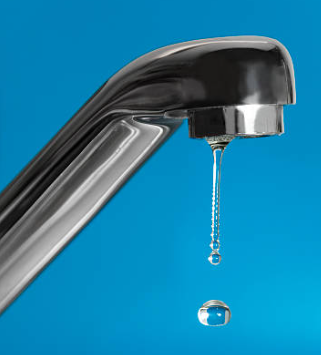
A dripping kitchen tap is one of the most common plumbing problems in the home.
The good news is that you don't usually need to replace the whole tap. In many cases, the problem can be fixed by replacing a tap valve or cartridge.
However, the first thing to work out is exactly where the water is coming from. This will give you a good idea of which part needs replacing.
Where is your kitchen tap leaking?
Take a close look at your tap and watch where the water is coming from.
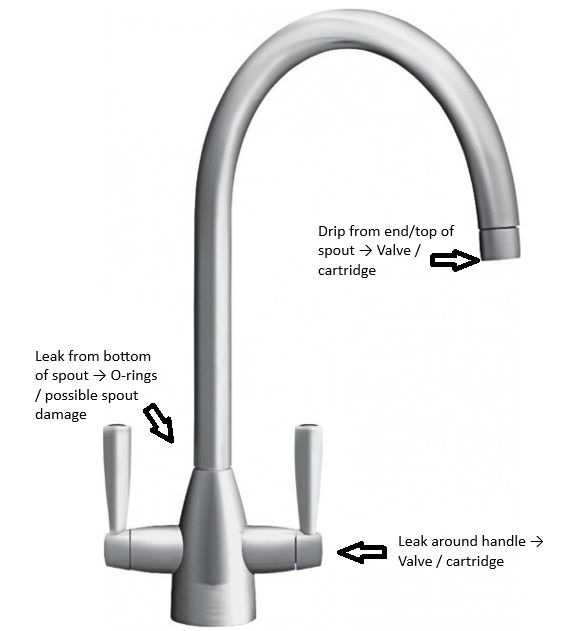
Dripping from the top of the spout
If water is dripping from the top of the spout, even after you have turned the tap off, the valve or cartridge is usually the problem.
The valve controls the flow of water through the tap. When it becomes worn or damaged, it may not close properly, allowing water to continue through to the spout.
For a tap with separate hot and cold handles, you will need to work out whether it is the hot or cold valve that needs replacing.
For a single-lever tap, there is just one cartridge that controls both hot and cold water.
For more help on replacing a valve, see our guide here.
Leaking from the bottom of the spout
If water is coming from around the bottom of the spout, where the spout meets the main body of the tap, the O-rings are usually the first thing to check.
The spout normally has O-rings that seal it where it joins the tap body. Over time, these can wear or become damaged, allowing water to leak from the base of the spout.
However, check the spout carefully for pinhole damage or corrosion. If the spout itself has a small hole or has started to corrode, replacing the O-rings won't solve the problem, the spout will need to be replaced.
So, if your tap is leaking from the bottom of the spout, check the O-rings and the spout itself before ordering any parts.
For more help on replacing an o-ring kit or spout, see our guides here:
Leaking around the handle
If water is coming from around the handle, the valve / cartridge may be the cause.
Check which handle the water is coming from:
- Leak around the hot handle → check the hot valve
- Leak around the cold handle → check the cold valve
- Leak around both handles → both valves may need checking
A handle that is stiff, loose or difficult to turn can also be a sign that the valve needs replacing.
Do you have a single-lever or two-handle tap?
Once you've worked out where the water is coming from, look at the type of kitchen tap you have.
Single-lever kitchen tap
If your kitchen tap has one handle that controls both the hot and cold water, it normally has one cartridge inside.
If the tap is dripping from the end of the spout, the cartridge is usually the part that needs replacing.
You don't need to work out whether it is the hot or cold side.
Two-handle kitchen tap
If your tap has separate hot and cold handles, each side has its own valve.
If the tap is dripping from the end of the spout, you need to work out whether the hot valve, cold valve or both need replacing.
How do I know which valve is faulty?
If you have separate hot and cold handles, don't rely on the temperature of the dripping water.
You might think a hot drip means you need the hot valve and a cold drip means you need the cold valve. Unfortunately, it isn't always that simple.
Water can remain inside the tap or mix within the tap body before coming out of the spout, so the temperature of the drip isn't always a reliable way to identify the faulty valve.
The easiest way is to test each side separately.
For more help on this, see our guide:
How to Tell Which Kitchen Tap Valve Needs Replacing: Hot or Cold?
What if I can't tell which valve I need?
Don't worry, sometimes it simply isn't obvious.
If you have a two-handle kitchen tap and have tested both sides but still can't work out which valve is causing the drip, buying both valves can be the simplest option.
If both valves are the same age, they have had roughly the same amount of use. Replacing both at the same time also means you won't have to take the tap apart again if the other valve starts dripping later.
Ready to fix your dripping kitchen tap?
Dripping from the end of the spout? Check the valve or cartridge.
Leaking from the bottom of the spout? Check the O-rings.
Leaking around the handle? Check the valve.
Have two handles? Work out whether you need the hot valve, cold valve or both.
Have one handle? You will normally need the cartridge.
Once you've identified the problem, you can replace the individual part rather than replacing the whole tap.